
You may have heard of both Regenerative Agriculture and Conservation Agriculture and wondered: what is the difference, or which is better? In this blog, Fern Baker explains why these approaches have far more in common than their names might suggest.
Growing concerns about declining soil health and the environmental impacts of modern agriculture have renewed interest in more sustainable, soil-friendly farming approaches. This interest comes from farmers, environmentalists, and policymakers alike.
Among the most prominent of these approaches are Conservation Agriculture and Regenerative Agriculture. Yet many people are unsure how to distinguish between them, and the terms are often used interchangeably.
Both approaches seek to improve soil health, support crop production, enhance biodiversity, and optimise the use fertilisers, pesticides and other external inputs.
However, they can differ in their scope and their intention. I will explain some of these differences here.
What is Conservation Agriculture?
Conservation Agriculture aims to improve soil health and prevent further damage, whilst maintaining crop productivity and boosting biodiversity above and below the ground.
It follows three main principles:
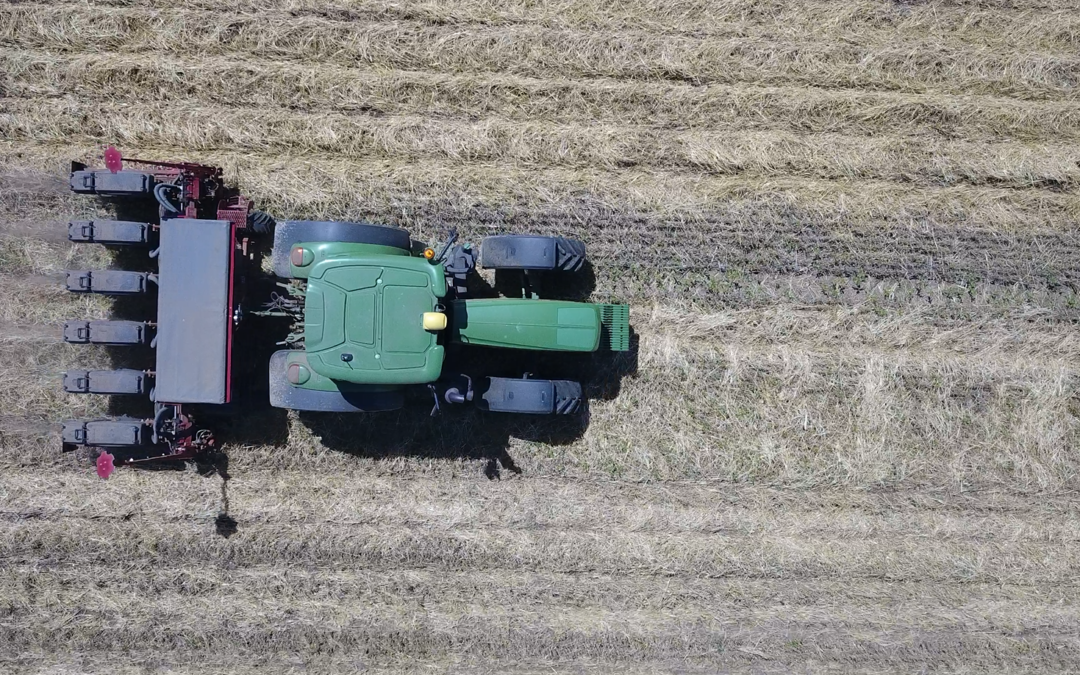
- Minimum mechanical soil disturbance, i.e. avoid ploughing and other forms of tillage.
- Permanent soil organic cover: cover at least 30% of the soil with plants – these can be living crops or a blanket of dead plant material, such as crop residues.
- Species diversification: plant a selection of crops in rotation, sequences and/or associations that may involve annual and perennial crops.
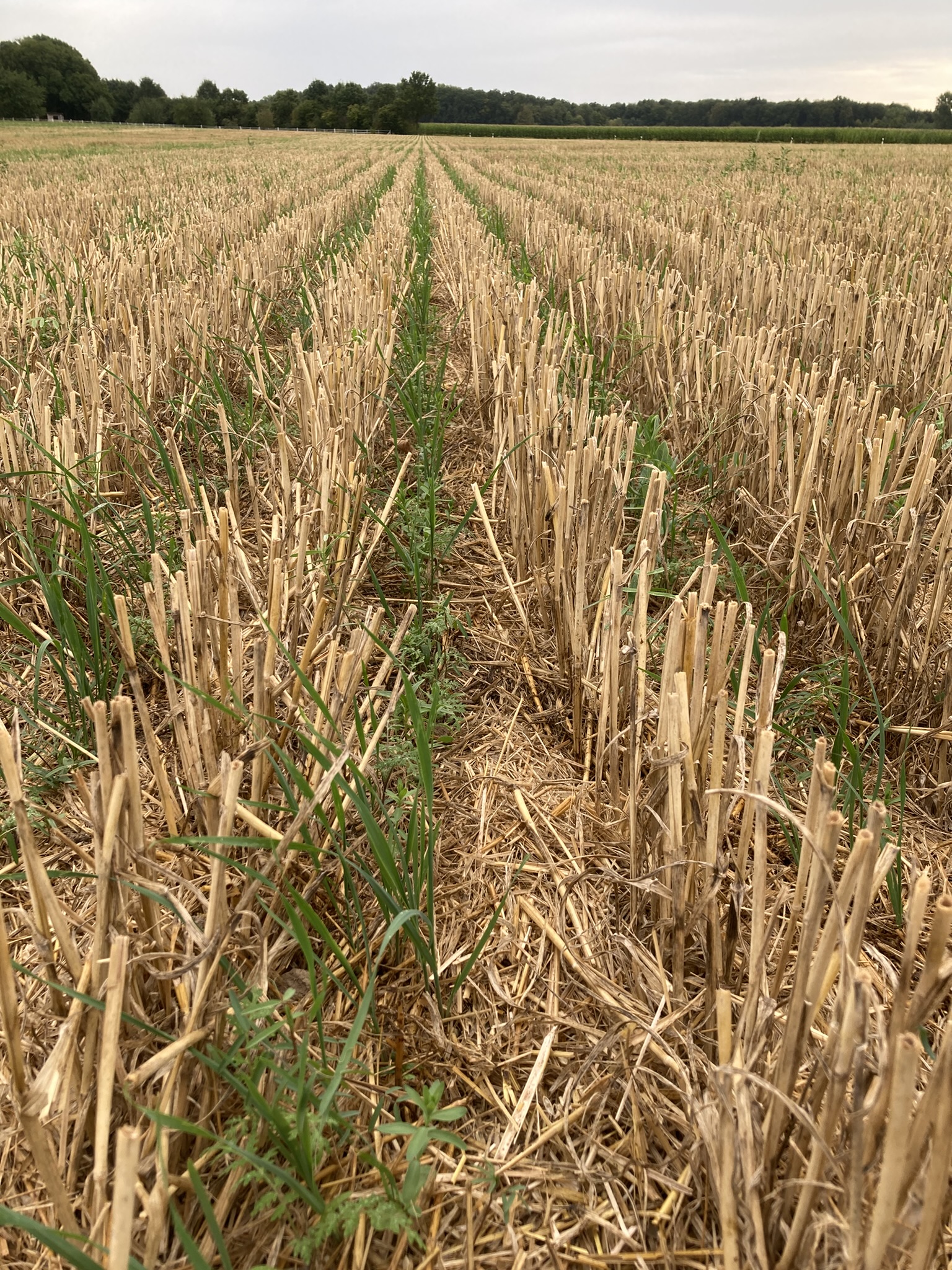
These principles work together to improve soil structure, enhance water retention, increase soil organic matter, reduce erosion, and support wildlife, including insects and soil organisms.
Conservation Agriculture, therefore, forms the foundation of sustainable farming.
Its clear principles can be adapted to a wide range of farming systems and environments across the world. It also provides a strong foundation upon which farmers can gradually adopt additional sustainable practices over time.
What is Regenerative Agriculture?
Regenerative Agriculture is an extended version of Conservation Agriculture. It is not a separate or competing approach.
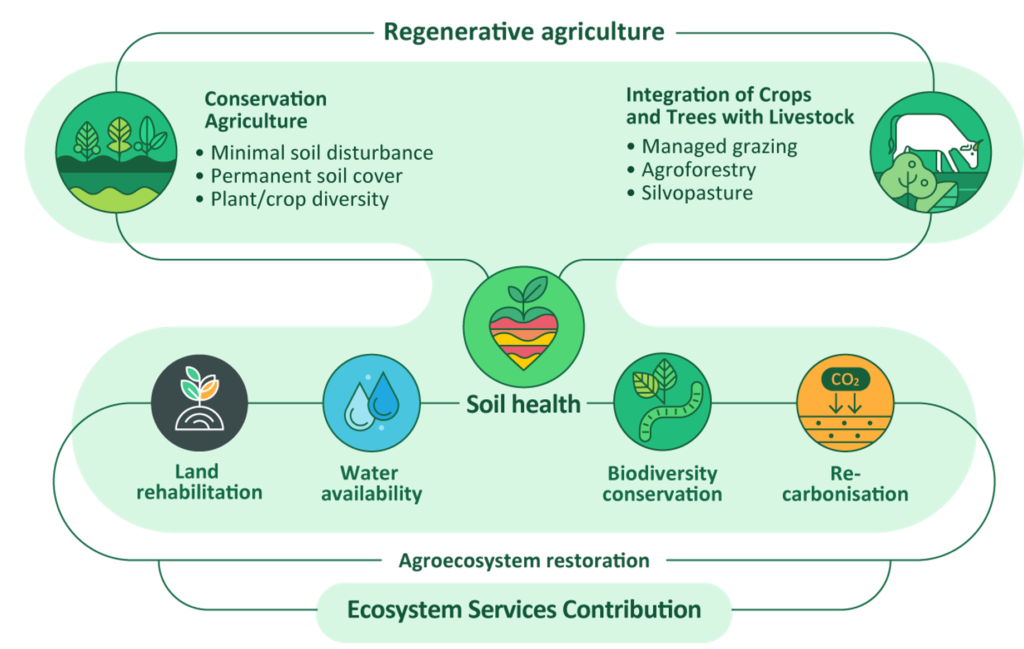
Regenerative Agriculture uses the same core principles as Conservation Agriculture: minimal soil disturbance, permanent soil cover and, diverse crops. Without these principles, a farm cannot be considered ‘Regenerative’.
However, Regenerative systems often use additional practices to enhance the Conservation approach, such as crop/livestock integration. Combining livestock and arable farming can create mutually beneficial relationships within a farm. Animal manure can provide organic fertiliser for crops, for example, while cover crops and crop residues can provide feed for livestock.
The objectives of Regenerative Agriculture are also often broader and more outcome-focused. Beyond improving soil health, Regenerative systems may seek to enhance ecosystem services, strengthen climate resilience, improve biodiversity, support nutrient cycling, and increase the long-term viability of farms and rural communities.
Importantly, however, Regenerative Agriculture remains less clearly defined than Conservation Agriculture. While Conservation Agriculture is anchored by its three widely accepted principles, definitions of Regenerative Agriculture can vary between researchers, businesses and certification schemes.
Its definition appears to shift between its principles, outcomes or practice. Most definitions are focused on soil health but a few are human health and economic centred.
As a result, there is no single, universally accepted definition of what constitutes a Regenerative farming system.
This ambiguity has led to the emergence of multiple classification and certification schemes. This creates a risk of greenwashing, where the term “Regenerative” loses meaning – much like “sustainable,” which has been widely adopted by products and corporations without always reflecting meaningful change.
The benefits of Regenerative and Conservation Agricultural Practices
The practices of Regenerative and Conservation Agriculture protect and improve soil health, which is fundamental to food production, food security, and environmental health.
Currently, our soils are suffering. Only 40% of EU soils are categorised as healthy. The majority of soils are eroded, compacted, contaminated and/or drained of nutrients and moisture. Intensive tillage-based farming is one of the major drivers of this degradation.
By improving soil structure, increasing biological activity and building soil organic matter, Conservation and Regenerative Agriculture practices can help reverse these trends.
For farmers, potential benefits include:
- Improved resilience to pests, disease, and climate extremes
- Reduced reliance on costly inputs such as pesticides and synthetic fertilisers
- Greater long-term productivity
This resilience is particularly valuable in the current climate of economic and environmental uncertainty, where reducing dependence on imported inputs can strengthen farm viability.
From a farm business perspective, these approaches can also offer practical financial advantages. While farmers have little control over the prices they receive for their products, they can control many production costs. Reducing tillage can lower expenditure on fuel, machinery and labour early in the growing season, while allowing farmers greater flexibility to make management decisions later, once seasonal weather conditions become clearer.
For environmental managers and policymakers, these approaches support a range of sustainability goals. Healthy soils underpin biodiversity, improve water regulation, support food security and contribute to climate action.
Healthier soils function more effectively as carbon sinks through improved microbial activity and increased soil organic carbon, helping to mitigate climate change. Soil plays a critical role here, storing around 80% of the carbon found in terrestrial ecosystems.
At the same time, healthier soils play an important role in climate change adaptation. They absorb and retain more water, helping to reduce flood risks during periods of heavy rainfall while providing crops with moisture during drought conditions.
What can TRAILS4SOIL teach us about Regenerative and Conservation Agriculture?
Regenerative and Conservation Agriculture encompass a wide range of possible practices. As mentioned, these include the core three practices of Conservation Agriculture, plus additional practices used by Regenerative systems.
This diversity creates uncertainty for farmers and policymakers. Which practices work best? Which provide the greatest benefits for soil health, productivity and profitability? And which combinations are most effective in different farming contexts?
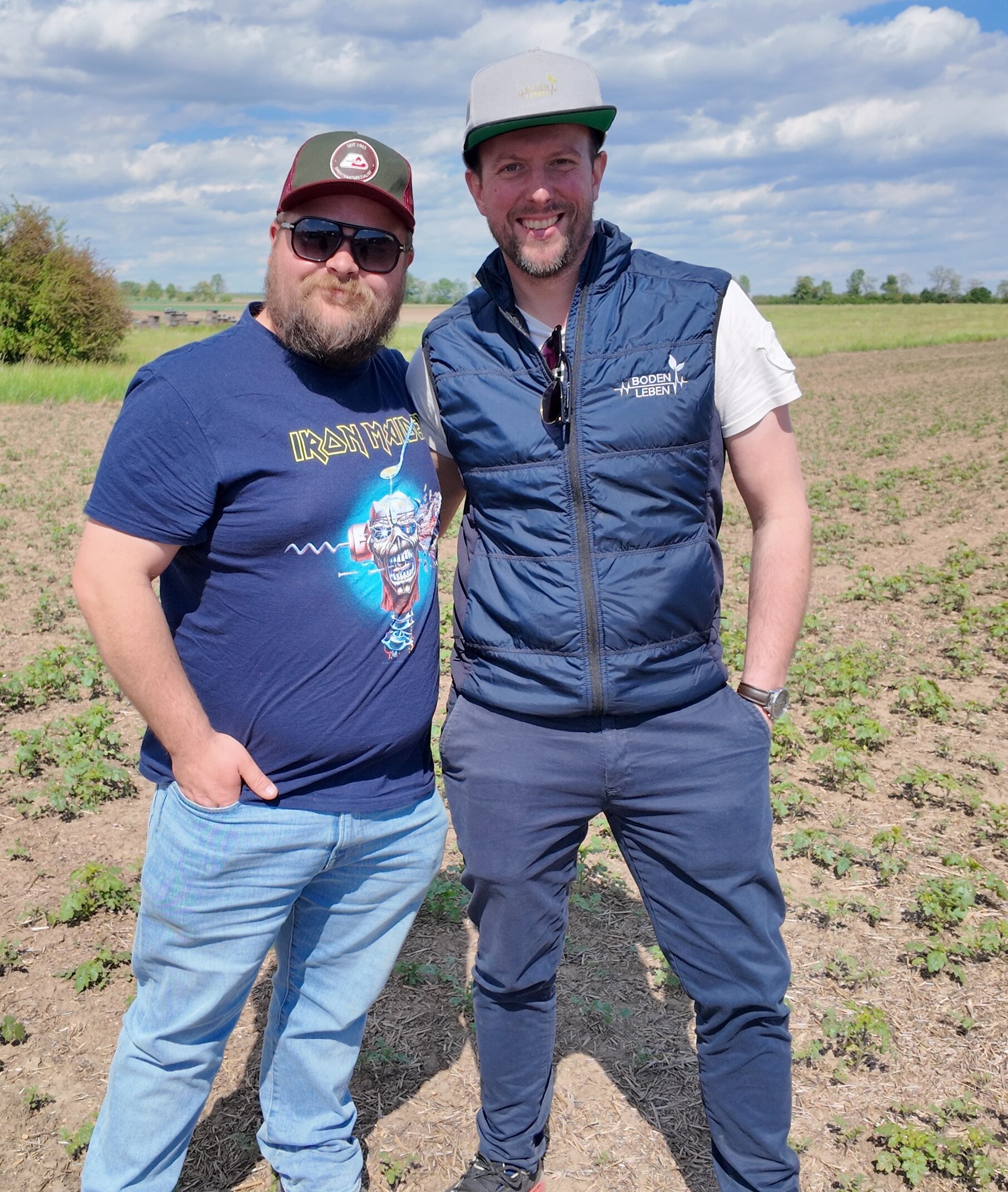
Our major 5-year research project, TRAILS4SOIL, is testing the performance of 21 different practices from Regenerative and Conservation Agriculture. These include core Conservation Agriculture practices, such as minimising soil disturbance, but also those from the Regenerative world, such as integrating livestock with crop farming.
Working with farmers, landowners, and policymakers across 100 working farms in nine European countries, we are assessing how these practices:
- Restore soil health
- Support long-term farm productivity
- Perform environmentally and economically in real-world conditions
The project will generate robust evidence on the effectiveness and practicality of these approaches across diverse farming systems. This will enable farmers to identify which practices are most beneficial for their farm, location, and challenges.
For, ultimately, what matters most is what works for farmers and the environment, and not necessarily the ‘Regenerative’ or ‘Conservation’ label.
We look forward to sharing our research journey with you. Do stay tuned for updates on our progress, alongside practical farming and policy insights that support our overarching aim: a more sustainable and resilient future for European agriculture.
About the Author
Fern Baker is a Research Fellow at the Countryside and Community Research Institute (CCRI), University of Gloucestershire. Her role on TRAILS4SOIL is to support stakeholder mapping and engagement: identifying critical audiences for project partners to engage with and ensuring that the project draws on their expertise and perspectives for more socially relevant findings.