
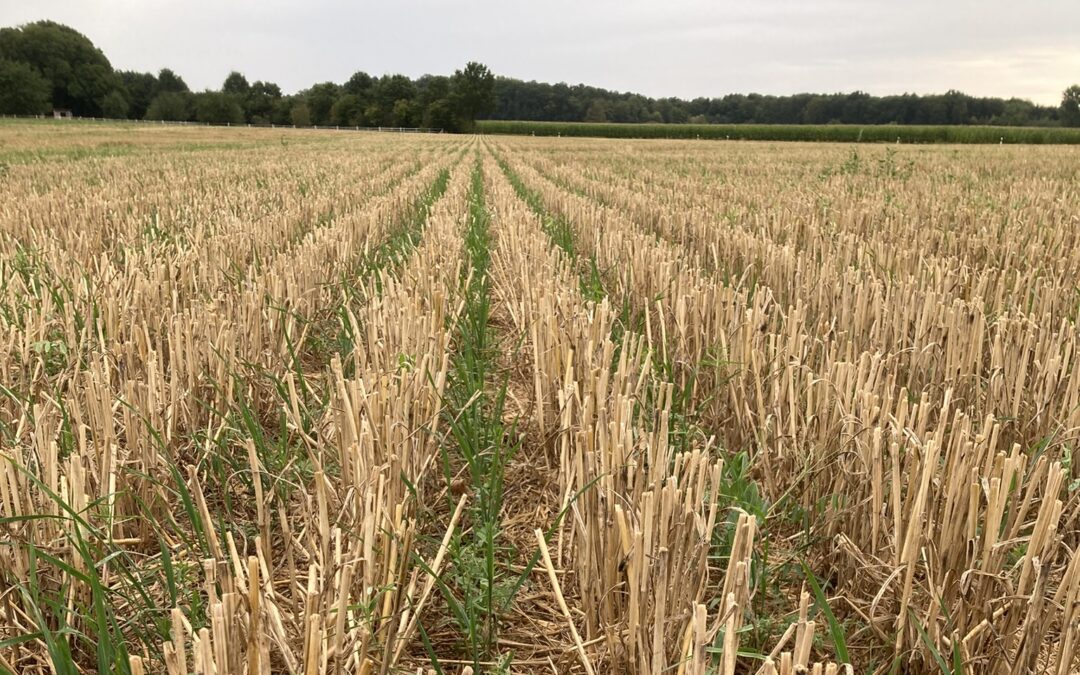
A new policy brief from TRAILS4SOIL examines the factors that hinder and those that enable adoption of Regenerative and Conservation Agriculture Practices, and how EU policy can support wider implementation.
Regenerative and Conservation Agriculture Practices (ReCAP) offer concrete strategies to enhance soil health and address the high levels of soil degradation present in EU agricultural land. Yet their uptake remains limited by a range of interconnected barriers.
The brief, Strengthening the policy framework for Regenerative Conservation Agriculture Practices: barriers, enablers, and policy opportunities, is written by Marie-Alizée Kuhn, Elisabet Nadeu and Melanie Muro of IEEP.
Drawing on the results of EU-funded projects centred on Regenerative and Conservation Agriculture, TRAILS4SOIL workshop data, and supplementary scientific literature, the authors show that:
- recurring barriers to adoption include knowledge gaps, high investment costs, uncertainty regarding crop yields, regulatory instability, social resistance to change due to an ageing population and peer influence, and technical barriers such as a lack of technical support and access to suitable machinery.
- key enablers, on the other hand, include peer-to-peer networks, evidence of positive soil health outcomes, financial incentives, supportive policies, and advisory support.
Existing EU policy frameworks, such as CAP eco-schemes and the Nature Restoration Law, along with emerging instruments like transition aid in the post-2027 CAP proposals, could represent strong opportunities for ReCAP adoption, the brief explains. However, as discussed in the brief, these measures still lack strong mandatory integration and sufficient scale to drive systemic change.
It makes the following recommendations to facilitate the uptake of ReCAP:
- Enable multi-actor collaboration for equipment sharing, peer networks, and effective advisory systems, and ensuring farmer involvement in the design of agri-environmental measures
- Enhance policy coherence by introducing long-term policy objectives through target setting, strengthening dedicated funding for ReCAP, explicitly strengthening a result-based payment framework under Article 10 of the post-2027 CAP, as well as integrating ReCAP within the CAP performance monitoring and evaluations framework (PMEF).
- Create private finance opportunities by mobilizing private capital via blended finance and landscape approaches, as well as implementing ReCAP Key Performance Indicators.
Read the policy brief here: https://trails4soil.eu/project/strengthening-policy-framework-for-regenerative-conservation-agriculture/